


Stinky Stuff in Your Dog’s Ears After Ear Mite Drops? When Treatment Makes Things Worse

If your dog’s ears smell bad, are full of stinky stuff, or seem to get worse after using ear mite drops, you’re not imagining it. Many pets have ears that are already inflamed, and traditional liquid ear mite treatment can trap moisture inside the ear canal, feeding yeast and bacteria and making irritation worse. That’s why some owners switch to a gentle ear mite spray that treats the problem without flooding sore ears and overwhelming sensitive skin.

If you’re dealing with that awful stinky stuff coming out of your dog’s or cat’s ears after starting ear mite drops, you’re probably confused, worried, and wondering whether you’ve somehow made the problem worse instead of better. Many pet owners search for answers after noticing that what began as a simple ear mite problem has turned into a stronger smell, thicker discharge, and an ear that looks red, sore, and increasingly uncomfortable.
This situation is far more common than most people realise. In fact, one of the most searched phrases online is some version of “ear mite treatment made things worse”, often followed by “ear smells bad”, “black gunk”, or “stinky stuff in dog ears”. The truth is that ear mite drops, while useful in some cases, can absolutely make symptoms worse when the ear is already inflamed or damaged.
When ear mite drops are first used, owners expect the smell to improve quickly. Instead, many notice the opposite. The ear begins to smell stronger, the discharge becomes darker or stickier, and the dog or cat shakes their head more violently than before. This happens because liquid ear mite treatment adds moisture to an environment that is already warm, dark, and irritated. Once moisture becomes trapped inside the ear canal, it creates ideal conditions for yeast and bacteria to multiply, which is where that strong, unpleasant smell really comes from.
Ear mites themselves do not usually cause a powerful odour. The smell develops when secondary infections take hold, feeding on wax, debris, and damaged skin. Adding repeated doses of ear mite drops can turn dry debris into wet sludge, which then sits deep in the ear canal with nowhere to escape. Over time, this mixture ferments, producing the sour, rotten smell that makes owners panic and assume something has gone badly wrong.

Another issue with ear mite drops is how they interact with sore skin. When a dog has been scratching for days or weeks, the skin inside the ear canal is often raw and broken. Inflamed tissue absorbs ingredients much more aggressively than healthy skin, which means drops that would normally be tolerated can sting badly and worsen irritation. This leads to more head shaking, more scratching, and more trauma to already damaged skin, slowing healing instead of helping it.
Some owners notice that their dog becomes increasingly resistant to treatment, pulling away or crying when drops are applied. This isn’t stubbornness, it’s pain. Forcing liquid ear mite treatment into an inflamed ear can create a cycle where treatment itself becomes part of the problem, especially when drops are used multiple times a day.
It’s also important to understand that most ear mite drops focus on killing the parasite, not on supporting the ear itself. While mites may be eliminated, the environment they leave behind can still be hostile. Dead mites, wax, and discharge remain in the ear, mixed with moisture, allowing yeast and bacteria to thrive. This is why people often search for “ear mites came back” or “ear mite drops not working”, when in reality the mites may be gone but the ear has developed a secondary infection.
In many cases, owners are told to continue treatment even when symptoms appear to worsen, under the assumption that things must get worse before they get better. While a mild increase in debris can happen early on, a rapidly worsening smell, increased discharge, or visible pain is not a normal or healthy response.
There is also confusion because some ear cleaning products used alongside ear mite drops can further irritate sensitive ears. Products that are too wet, too harsh, or used too frequently can strip the ear’s natural protective barrier. You’ll often see owners mention using different cleaners or solutions, sometimes including veterinary-recommended options like otodine, without realising that combining multiple liquid products can overload an already inflamed ear.
This doesn’t mean these products are inherently bad, but timing and condition matter. What works well in a mildly dirty ear can be completely inappropriate for an ear that is raw, swollen, and producing thick, smelly discharge.
If ear mite drops have made things worse, the most important step is to stop and reassess rather than pushing through out of fear. Continuing to flood the ear when it is clearly deteriorating rarely leads to improvement. Allowing the ear to dry, calm down, and recover is often essential before any further treatment can be effective.
Many experienced pet owners eventually discover that gentler approaches work better once ears reach this stage. Treatments that do not rely on flooding the ear canal, and that help absorb moisture rather than add to it, are often better tolerated and allow the skin to heal. This is especially important when dealing with stinky stuff, because smell is almost always linked to moisture and microbial overgrowth rather than mites alone.
It’s also worth acknowledging the emotional toll ear problems take. Smelly ears are distressing, messy, and hard to ignore. Owners often feel guilty, worried about doing the wrong thing, and pressured to keep applying treatment even when their instincts tell them something isn’t right. That stress can lead to over-treating, which only worsens the cycle.
If you’re here because ear mite drops didn’t help and the ears now smell worse, you didn’t fail. You followed common advice that doesn’t suit every situation. Ears are delicate, and treatment needs to match the condition of the ear, not just the diagnosis.
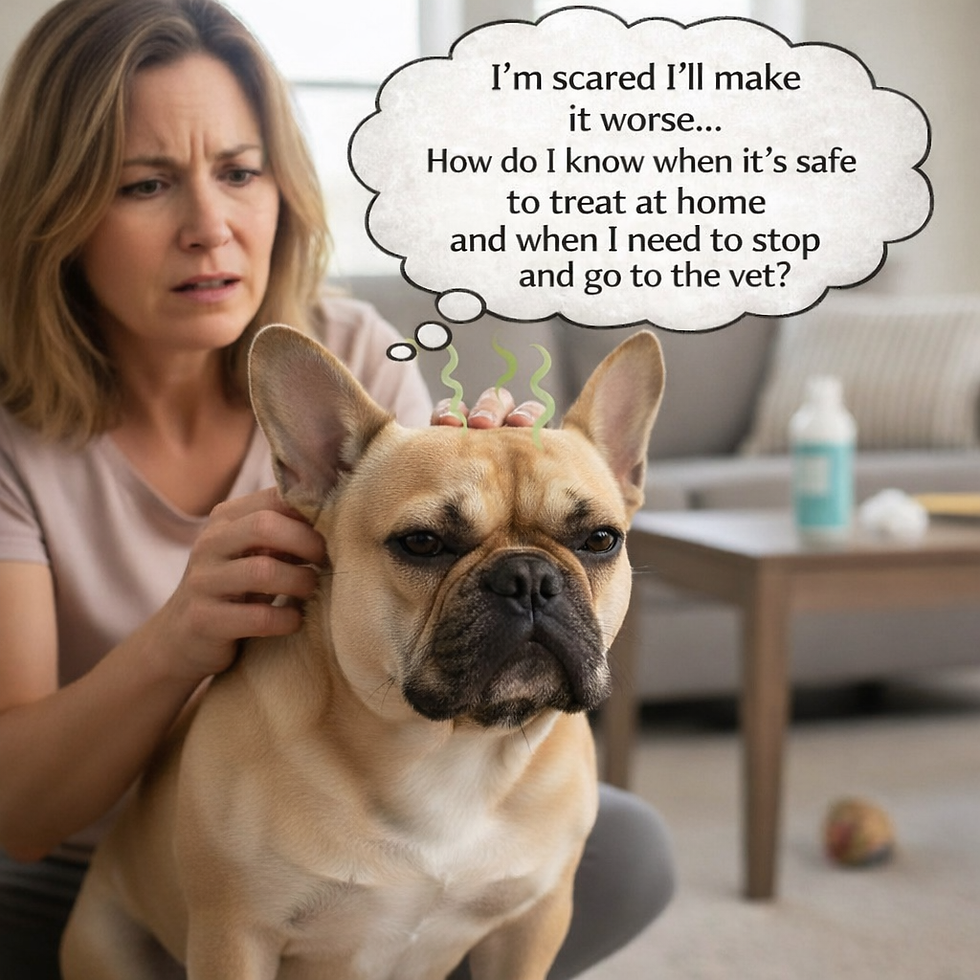
If swelling becomes severe, the ear feels hot, or your pet is in obvious pain, veterinary help is essential. Some infections require prescription treatment, and no home ear mite treatment should be forced through significant discomfort. However, many cases improve simply by changing approach and allowing the ear environment to stabilise.
Final thoughts
Stinky stuff in your dog’s or cat’s ears after ear mite drops is a sign that something is out of balance. While ear mite treatment is sometimes necessary, liquid drops can easily make inflamed ears worse by trapping moisture and irritating damaged skin. Healing is not meant to look like deterioration, and adjusting your approach is not giving up, it’s responding intelligently to what your pet’s ears are telling you.
The goal is not to drown the problem, but to restore conditions where mites, yeast, and bacteria cannot survive and the ear can finally recover.


Comments